Local Training Activities in Romania
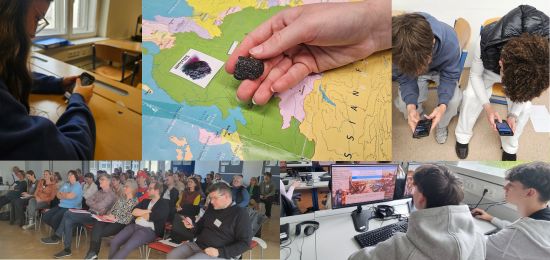
Continuing the Acitvity 4.1 of the InterGames project, a pilot testing with students from the Colegiul Naţional Pedagogic “Carmen Sylva” in Timișoara (Romania) was held in April and May.
Instead of lectures and textbooks, they were handed a laptop (or in some cases smart phones) and asked to play Quandary, a free online game that throws you into a fictional colony facing real-life moral dilemmas. Under the guidance of their teacher, Diana Sophia Codat, students tested this award-winning educational video game.
What made this interesting? The game wasn’t just about fun. It asked students to make tough decisions, lead a community, and think about the greater good. After playing, students had group discussions where they debated their choices and reflected on the lessons learned.
What’s Quandary about, you might ask:
Quandary is all about ethical decision-making. You’re the leader of a community on a planet called Braxos, and your job is to solve problems ranging from resource sharing to environmental issues. It’s less about winning and more about thinking: What’s the right thing to do? Who gets what? How do you keep everyone happy?
The outcome of the testing was quite positive, with 86% of studnts found the game highly engaging and 67% of them stated it was easier to remember content learned through the game. Some of their comments included: “It felt like a real game,” “It was very interactive,” and “I learned new things.” Many also said they saw their subject from a new angle after playing. And most importantly, they enjoyed the experience. The feedback from the teacher was just as encouraging. They found the game easy to work into the regular curriculum and loved how quickly students engaged. However, the teacher pointed out the downside to incorporating video games in a regular curriculum: not enough class time and already-crammed teaching hours.
Games like Quandary aren’t just for fun: they can be meaningful, thought-provoking tools that bring subjects to life. The local testing in Romania showed that when you combine smart game design with good teaching, students really get involved and easily emember what they’ve learned.
This pilot is part of something bigger: a push to make learning more engaging and relevant thorugh InterGames project. And based on this round of testing, we’d say it’s game on for more classrooms!